


How Ferrari must step up its efforts to end its long F1 championship wait
The Italian team has made a promising start to Formula 1’s new era, so what more does it need to challenge Mercedes and finally take its first crown since 2008?

A red-and-white bolt rushed out of its starting blocks with the pace of a startled impala and approached the opening right-hand turn of the Bahrain International Circuit, now as the figurehead of the chasing pack. The Ferrari had left its competitors in its wake; the remaining cars seemingly suspended in time as the starting lights receded into the night’s sky.
It was evident during Bahrain’s pre-season tests that the getaway speed of the 2026 Ferrari was effortlessly potent versus that of the non-Ferrari-powered machines, which were decidedly more ponderous in the practice starts. Even with the addition of a five-second pre-start window, one introduced to give the grid more time to spool their turbos and counteract the turbo lag present in the new powertrains, Ferrari and its ‘customer’ teams were simply quicker off the line.
This has persisted through the opening rounds of 2026. It hasn’t necessarily mattered too much where the Ferraris qualify; the starts have been so strong that the two SF-26s can breeze to the front of the order like a gale-force wind. A Ferrari driver taking the early lead seemed like a near-certainty, but ultimately as inevitable as losing it a few laps later.
As widely expected at the start of the year, Mercedes has provided the benchmark for the rest of the teams to reach. Ferrari is the only team to have presented any realistic kind of challenge over the early part of the season; reliability issues have restricted McLaren’s hopes of retaining its constructors’ title thus far, though its Suzuka performance was promising, and Red Bull has lost ground to the rest of the ‘Big Four’ as it beds in its all-new powertrain.
This, of course, was good news for Ferrari’s long-suffering fanbase. Perennial hopes of a first F1 title since claiming the 2008 constructors’ championship have been consistently dashed: sometimes on the eve of the season, and other times – perhaps more gallingly – at the final stretch.
Fernando Alonso’s thousand-yard stare as he lost the 2012 title to Sebastian Vettel in the Brazil finale is an image that has pervaded over the past 14 years. Vettel himself experienced Ferrari heartbreak just under six years later when he was little more than a passenger in his slow waltz into the Hockenheim barrier, in a mistake that is generally considered to have been the catalyst in his failure to win a fifth world title.
Since then, the team has won races but failed to mount a consistent championship challenge. It got ‘closest’ to a drivers’ title tilt in 2022, the dawn of the latest ground-effect era, but strategic errors and Red Bull’s growing strengths as the weight came off its RB18 led Charles Leclerc’s early championship challenge to run out of road.
Let’s also not forget that Ferrari took the 2024 constructors’ battle down to the wire against McLaren, when Red Bull’s pseudo one-car set-up spilled a hatful of points. But, since it didn’t win, it’s very easy for that to slip the mind…
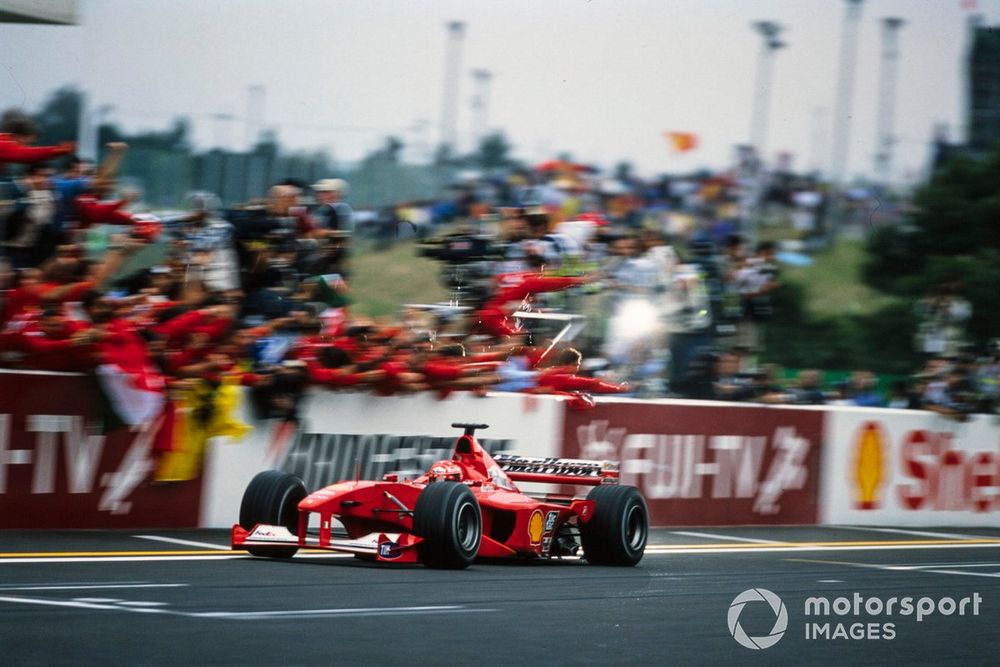
Schumacher’s win in 2000 ended Ferrari’s 21-year wait for a drivers’ title
Photo by: Motorsport Images
Ferrari has long since surpassed the length of its drought between its 1983 and 1999 constructors’ championship wins. It’s also fast approaching the 21-year layoff between Jody Scheckter’s drivers’ title success in 1979 and Michael Schumacher’s first Ferrari championship in 2000 – after all, Kimi Raikkonen’s championship triumph in 2007 is already nearly two decades ago. How time flies.
So, can the team change that in 2026? It’s not impossible – but it’s going to take a little bit of work to get there.
Ferrari's big momentum shift
It’s surely not too uncharitable to say that Ferrari wilted under the hype of the 2025 season. After missing out on the previous year’s constructors’ title by just 14 points, essentially the cost of Carlos Sainz’s late-race clash with Sergio Perez in Baku (or one of Leclerc’s lesser weekends during a difficult stretch between Montreal and Silverstone), Ferrari felt that its wide-reaching technical changes would weave more performance into its SF-25 package. Add the long-awaited signing of Lewis Hamilton into the mix, and the Prancing Horse trotted into the new season with great expectations.
For myriad reasons, those expectations could not be delivered upon. Ferrari didn’t have the luxury of time to suss out its double pull-rod suspension, and the decision to stop development as early as April put it in an increasingly difficult position. While Leclerc was able to stuff a handful of podium finishes into his pocket, Hamilton found the car an extension of his grievances with the ground-effect era.
When it became clear that the SF-25 in its early state was not likely to challenge McLaren for honours, Ferrari chose to sacrifice 2025 for a more harmonious start to 2026. It hurt the team in the short-term; the future of Fred Vasseur as team principal was put under scrutiny, as were Hamilton’s longer-term prospects in F1 after a false dawn characterised by his China sprint win. Yet the team managed to hang tight under the pressure; Vasseur’s deal was renewed, and the Frenchman did his best to protect his team from criticism.
It was rather emblematic of the old F1 adage that ‘when the flag drops, the bullshit stops’ – at least, for all of about two days…
Perhaps Ferrari knew it was onto something with its 2026 package. When it came to the prelude to the arrival of the new regulations, Maranello’s finest were more than happy to let the other teams and manufacturers conduct their battles in public. Let’s review: Mercedes assumed the limelight and tried to deflect some of it onto Red Bull amid the compression ratio furore, Honda was in strife, and Audi was busy acquainting itself with the ramifications of its code switch.
Amid the back and forth of Mercedes’ praise of Red Bull’s deployment capabilities and Max Verstappen’s suggestion that the comments from within the Silver Arrows camp had a touch of the sandbag about them, Ferrari entered from stage left during testing and blew everyone away with its rocket-ship starts. It was rather emblematic of the old F1 adage that ‘when the flag drops, the bullshit stops’ – at least, for all of about two days…
During the earlier discussions between the teams, manufacturers and the FIA, the topic of starts had been put on the table. The deletion of the turbo-mounted MGU-H from the 2026 powertrain formula would naturally result in the emergence of turbo lag, and the reduced torque available on demand was expected to make starts more difficult. According to Vasseur, this was waved away by the other manufacturers as something that was not an immediate concern.
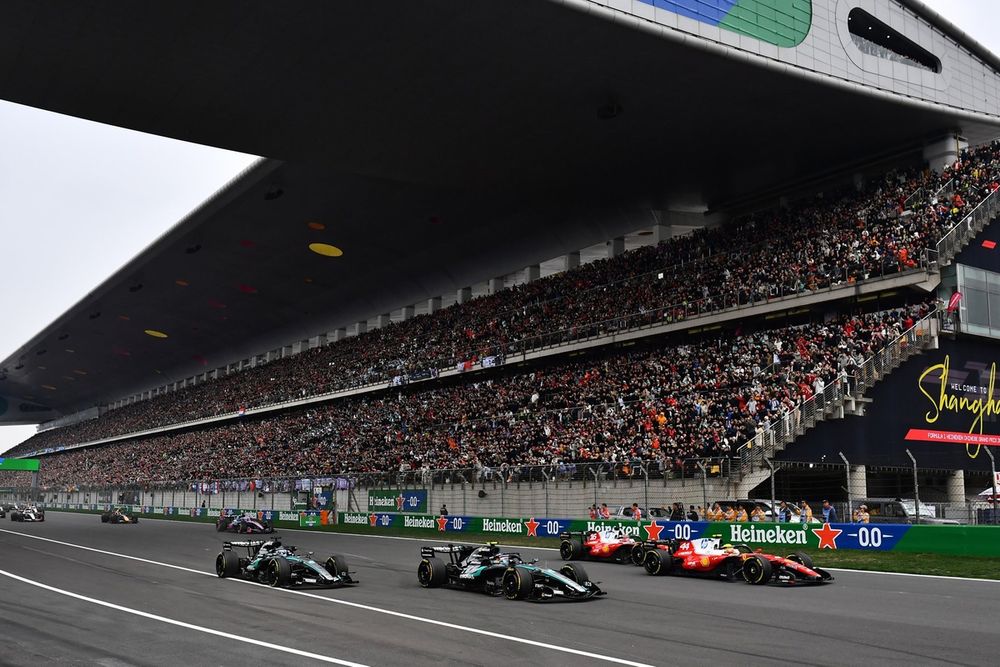
Hamilton’s SF-26 vaults into the lead at the start of the Chinese Grand Prix
Photo by: James Sutton / Formula 1 / Formula Motorsport Ltd via Getty Images
It’s generally understood that Ferrari responded to this by producing a smaller turbocharger to compensate at the starts. By reducing the size and weight of the turbine, it requires less time for the exhaust gases to spool it up, ensuring that the torque is available at the rear axle sooner.
When this manifested as a considerable advantage in testing, the other teams were alarmed at the glacial pace of their own starts. It was enough for the 5s pre-start procedure to be introduced, one that offered the other teams more time to get their own larger turbos spooled up.
Although Ferrari was against this, its stance being that significant warning about the starts had been provided, it still maintained a palpable advantage at the lights. The opening two races were defined by a Ferrari driver taking the lead from a Mercedes: Leclerc got the holeshot on George Russell in Australia, and Hamilton got the jump on Antonelli a week later in China. In Japan, Leclerc got past both Mercedes drivers but was beaten into the lead by Oscar Piastri, the McLaren having started one slot ahead on row two.
But the SF-26 is no one-trick pony. Ferrari has managed to produce a genuinely quick car out of the box, one that is able to offer Mercedes some resistance in the early stages of a race. Although the car’s early runs in Bahrain suggested that the rear end needed a bit of tuning, the ultimate package is driveable and one in which both Leclerc and Hamilton have found immediate comfort.
“We are starting to have quite a clear picture on what are the characteristics of the car that we need to improve in order to get better,” Leclerc explained. “But I think chassis-wise, it’s quite a strong car, actually. And that’s probably our strength so far.”
Where is Ferrari lacking?
Leclerc continued: “Power unit is where we are lacking compared to the Mercedes at the moment”, something that he estimates is worth a 0.4-0.5s per lap deficit. While Ferrari’s small turbo helps at the low end of the range, its limitations begin to emerge when the Prancing Horse’s engine room works at its top end. Larger turbochargers produce more power at higher revs, through greater volumetric efficiency at the same boost pressure.
Mercedes has that ball in its court, plus a smidgen more across the board with its powertrain. “There is the optimisation of the power units, and that is probably the biggest difference between us and Mercedes,” Leclerc added. “And just with the optimisation, you can make a big difference. There’s not only that. There’s also raw power that for now we are down compared to them.”
While Ferrari feels that it has been able to present Mercedes with a match with regards to the chassis, it cannot rest on those laurels. According to GPS data, cornering pace between the two cars is beat-for-beat, but the greater top-end speed in the Mercedes is also demonstrated here. In addition to a power advantage, general straightline speed is another area where Mercedes sits ahead. Hamilton pointed to its potency with straight mode.
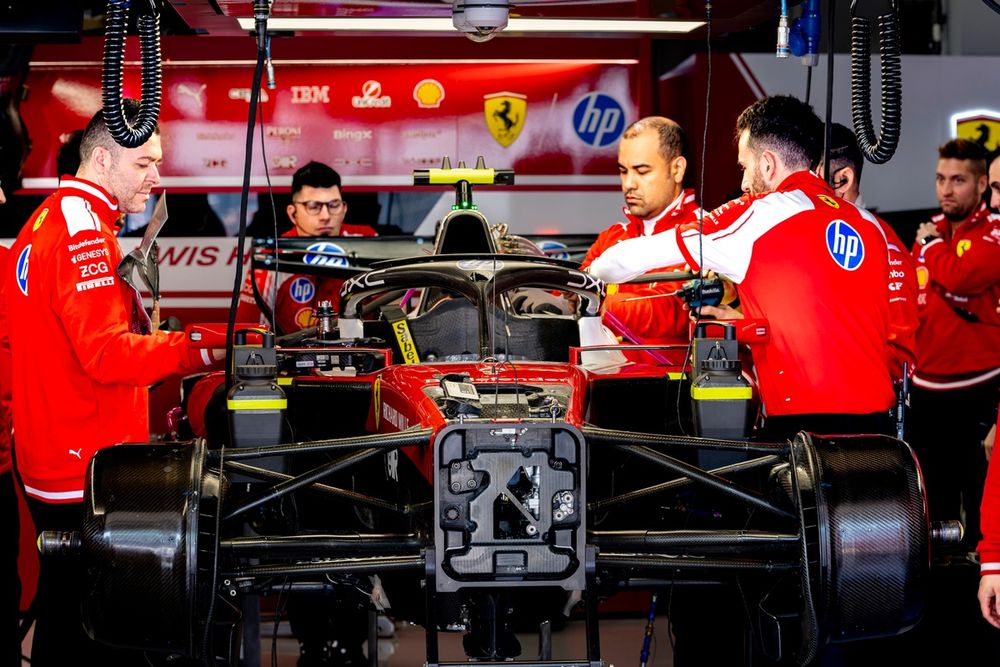
The Ferrari chassis is reckoned to be a match for Mercedes, but the power unit needs work
Photo by: Marcel van Dorst / EYE4images / NurPhoto via Getty Images
Ahead of the Japanese Grand Prix, it was suggested that Mercedes had a front-wing flap that flaunted the regulations governing the transition time between straight and corner mode, but the team stated that this was not by design. Instead, it cited a reliability issue that precluded the front wing from returning to its natural cornering position in the necessary 400-millisecond window.
Regardless, Mercedes does appear to have found a way to dump a little bit more drag on the straights; Hamilton stated that when the W17s put their active aero package into use, Ferrari struggles to stay on level terms. “If you look at the races they’ve been just as quick through the corners, I would say,” he contended. “But mostly when they open the SM [straight mode], they’ve been really pulling. So it will be interesting to see what deployment schedule they have.”
Russell offered his own explanation, stating that “it definitely seems we have a low-drag car, which is good. I don’t know if it’s specifically due to the SM zones or if it’s the straightline [speed] itself. Obviously every straight line we’ve been on so far has been an SM zone, so you can’t really disconnect the two, but the general thought is probably correct.”
Ferrari might be lacking a bit of aerodynamic efficiency, although this is where some of the team’s inventiveness has come into play; the rotating ‘macarena’ wing has only been spotted in testing and practice in China, but the hope is that the 200-degree rotation of its rear-wing active aero device can deliver on the team’s attempt to cut more drag from the car on the straights.
Ferrari will have to put significant stock in its development capabilities, something that served it well during its 2024 constructors’ challenge and allowed the squad to benefit over the final races of the year
Can Ferrari challenge Mercedes over 2026?
In theory, yes. Recent seasons have shown that the early pacesetting team can be toppled; McLaren, for instance, clinched the 2024 constructors’ crown through studiously developing its MCL38 to move past both Red Bull and Ferrari in the performance stakes.
But the field was a bit more compressed across 2024 with a settled (and frozen) engine formula and less to find aerodynamically. Ferrari has, at best, a half-second gap to close down – but Mercedes will not be standing still in its own development curve. It depends on how much juice is left in Ferrari’s 2026 car, and whether the engineers working at Maranello can ultimately extract it.
“We are still very early on in the season,” Leclerc said. “So yes, I do believe it’s possible. “Is it a huge challenge? It absolutely is. And I think also because Mercedes is not relaxing and will keep pushing massively as well. The point of focus at this moment of the season, at this moment of these regulations, there are many.”
Ferrari will have to put significant stock in its development capabilities, something that served it well during its 2024 constructors’ challenge and allowed the squad to benefit over the final races of the year. Perhaps the biggest potential opportunity hinges on the catch-up mechanics that the FIA has implemented for the new powertrain formula: the ADUO (Additional Development and Upgrade Opportunities) system.
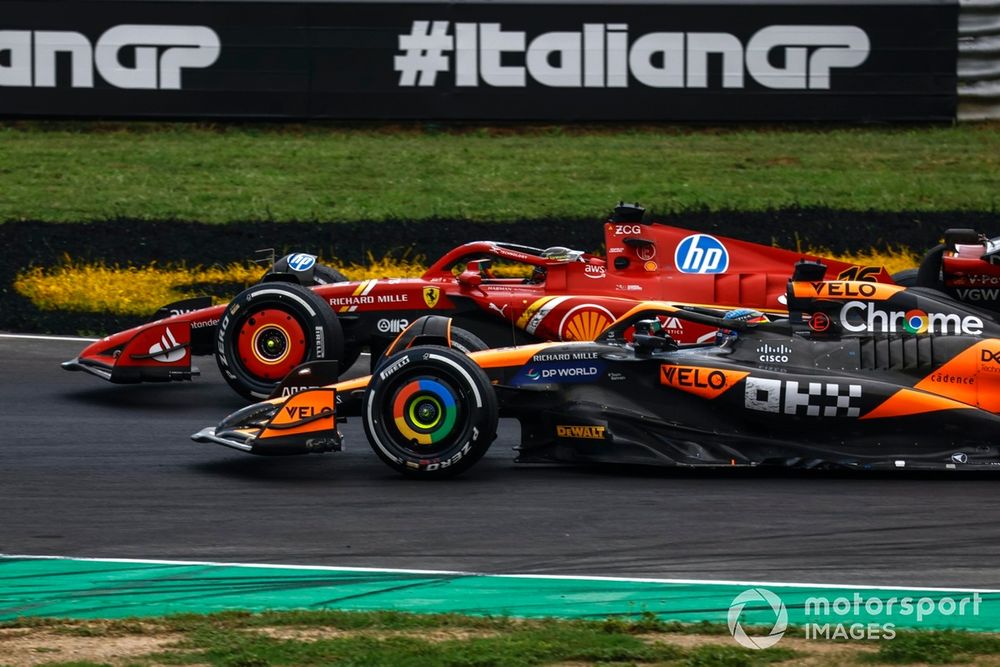
Ferrari’s fight with McLaren for the 2024 constructors’ crown was unrelenting
Photo by: Zak Mauger / Motorsport Images
Through the outputs registered by the FIA’s own sensors in the car, the governing body keeps tabs on every manufacturer’s power level. If a power unit is between 2% and 4% down on the highest power output, the manufacturer gets a free upgrade – above 4%, they will be permitted two.
A spanner has been thrown into the works by the cancellation of the Bahrain and Saudi Arabian GPs, because the first checkpoint had been planned for the conclusion of round six. It remains unclear whether the checkpoint will stay in place between the Miami and Canadian races, or whether it will be at the conclusion of the calendar’s sixth race – now the Monaco Grand Prix in June.
Should Ferrari find itself beyond the 2% mark, then it has an opportunity to close the deficit and hope that it can garner a bit more performance at the top end.
Of course, the choice of turbo architecture will pose a natural disadvantage when it comes to performance on the straights, but there are plenty more opportunities for Ferrari to refine its design; presumably, the powertrain engineers have already fleshed out a few concepts, ready to funnel out in the event that an upgrade is made available.
We must not forget the implications of the compression ratio saga. You couldn’t move during F1’s pre-season for the noise about Mercedes’ alleged circumvention of the 16:1 ratio in hot conditions, but this is very likely to have been noise over very little. The decision to introduce mid-season tests to measure compression ratio during hotter temperatures at 130C reached unanimity, including Mercedes’ vote, suggesting that this was not a vital component of its success.
Indeed, Vasseur predicts that the changes in measuring compression ratio will not be a “game changer”, and that Ferrari’s hopes rest in being able to take advantage of an ADUO-influenced update. But, since the FIA will be measuring power output on the fly before determining which manufacturers can upgrade their engines, could Mercedes keep its power levels down just enough to deny Ferrari that opportunity? It’s not impossible.
Regardless, there’s a quiet optimism in the camp, one that hasn’t necessarily been attributed to Ferrari in quite some time. Mercedes may be a little bit out of reach in the short term, but nothing is ever unrecoverable.
Leclerc believes it’s possible to catch the Silver Arrows. You would bet that there’s a significant contingent in Maranello who agree.
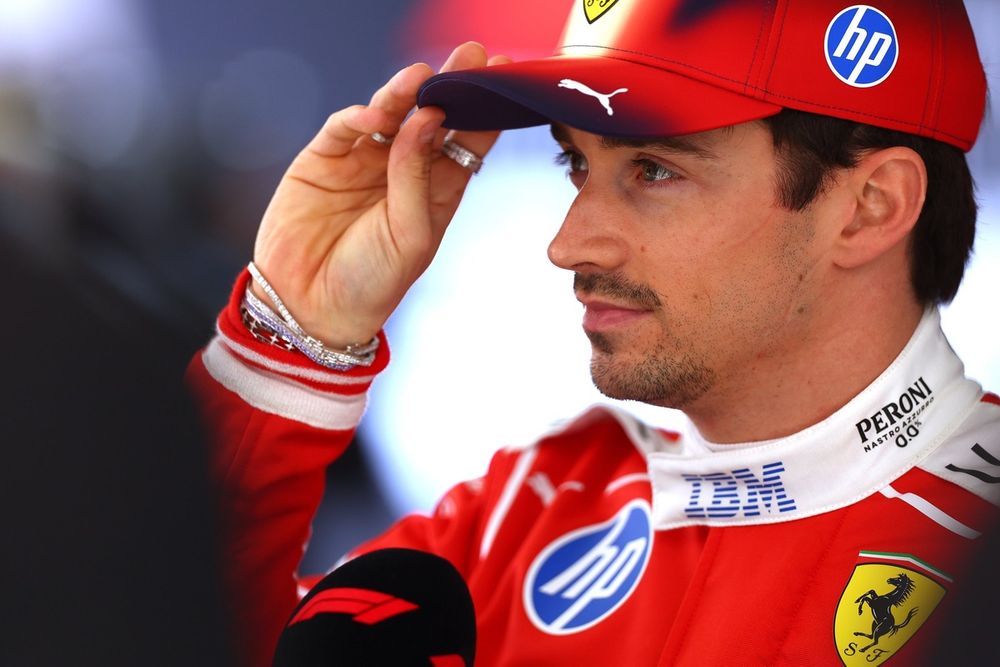
Leclerc has collected two podiums from the season’s first three grands prix
Photo by: Andy Hone/ LAT Images via Getty Images
Hamilton's got his groove back
It was disconcerting to listen to Lewis Hamilton during the latter phases of the 2025 season, when the optimism about his blockbuster move to Ferrari had long since slipped into the ether.
When Hamilton is going through a rough patch, you know about it; despite the fact he is a globally recognised seven-time champion and has the commanding aura that comes with it, he’s ultimately a man who wears his heart on his sleeve. His voice drops to a near-whisper when he’s had a bit of a stinker, and the answers become slightly terser once he’s decided he wants to disappear for a bit.
There’s been a lot less of the downcast Hamilton so far in 2026, with a very simple reason for that: he has a competitive car that he seems to enjoy driving.
It’s no secret that Hamilton didn’t like the ground-effect regulations. Firstly, the Mercedes machines with which he was saddled were prone to bouncing in high-speed corners, a variable that he felt unable to control.
Secondly, the overall nature of the regulations made it much more difficult to coax the car through the slower corners; this was a grievance he shared with Max Verstappen, who found the car incredibly lazy in low-speed conditions. But this is where the similarity between the two ends: at the lower downforce levels produced by the 2026 cars, Hamilton feels a lot more at home.
There’s more to this than simply the car. Hamilton has suggested that an off-season attitude shift has also contributed to a better start to 2026. He seemed to recognise that his mood and his performances went hand in hand and culminated in a dangerous cycle. The worse he felt, the worse it got.
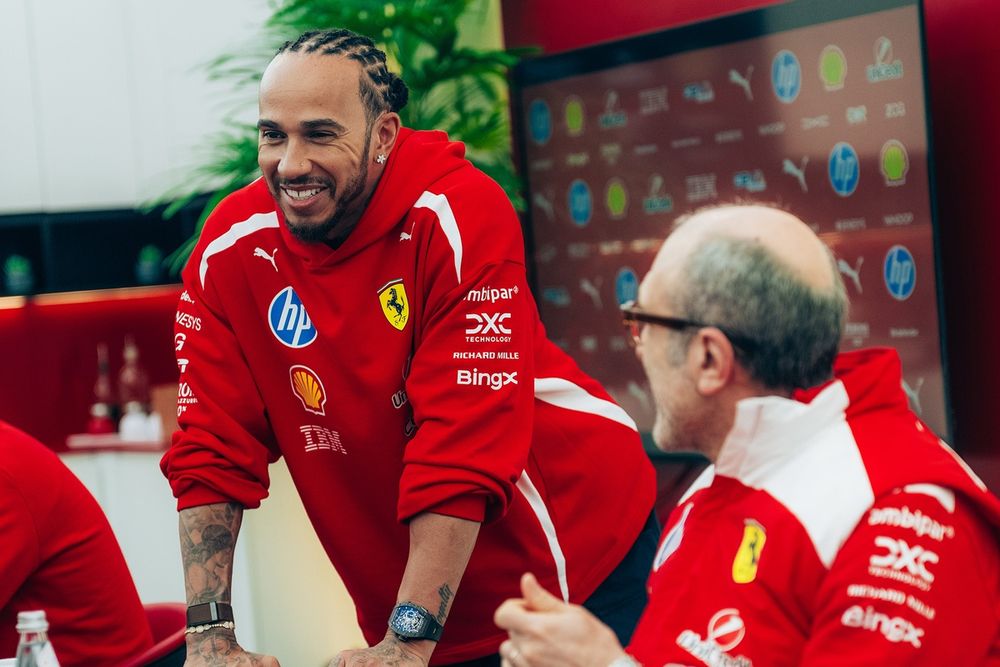
A much more upbeat Hamilton claims that at the age of 41 he is training harder than ever
Photo by: Ferrari
Even at the age of 41, Hamilton believes that he’s training harder than any of his contemporaries on the grid.
“It’s just a change of attitude,” Hamilton explained in Japan. “It’s just not letting all the BS that comes out of people’s mouths surround me. In the way of knowing who I am and what I’m able to do, I hope you saw that in the last two races, particularly the last race.
“I’ll continue to try and show up this year. I’ve not lost what I’ve had. I’m training harder than ever. I was in Tokyo between [Shanghai and Suzuka], I’ve run like 100km. I know that none of the drivers I’m racing against have trained as hard as I have and given it what I have, especially at my age as well. I love that I still have that drive within myself.”
There were moments when Hamilton showed that he still had ‘it’ during his ground-effect Mercedes years; that win at Silverstone in 2024 being perhaps the most memorable – and feel-good – story in that era. But the high points were limited, and this seemed to continue as he grappled with his new environment in Maranello.
It’s been another off-season of change for Hamilton: new car, new race engineer, new attitude. For the time being, it seems to be working.
This article is one of many in the monthly Autosport magazine. For more premium content, take a look at the May 2026 issue and subscribe today.
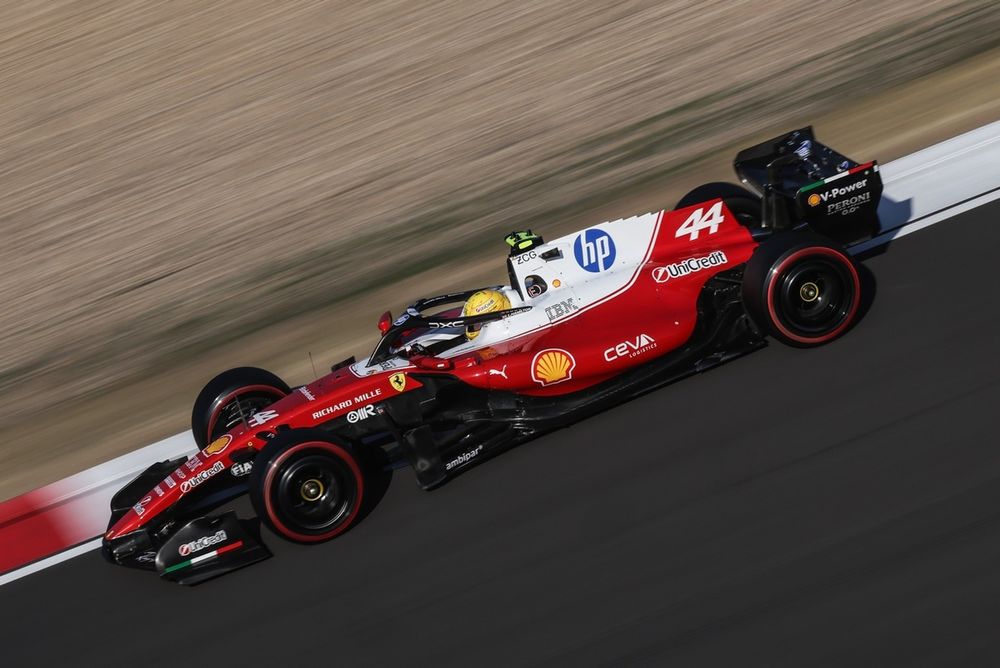
With the ground-effect era now behind him, Hamilton relishes the fact that he has a competitive car that he enjoys driving
Photo by: Lintao Zhang / LAT Images via Getty Images


The biggest surprises and disappointments of F1's 2026 field so far

The pros and cons of F1's enforced break and cancelled races

How F1 teams are exploring 2026's bargeboard reforms

Analysis: Antonelli is leading F1's title hunt, but is he quicker than Russell?

Stella was right about F1's closing speed problem - but here's why there's no simple fix

Verstappen's journalist spat exposes a greater issue in undervaluing media

Japanese Grand Prix Driver Ratings 2026

How Bearman's 50G crash saved Antonelli's bacon in Japan

What happened to Evans and Solberg at WRC Rally Croatia

WRC Croatia: Pajari holds off Neuville to lead after Friday drama

The key figures Red Bull has lost over the past three years

Trackhouse team owner on why MotoGP must take risks to grow in the US
Subscribe and access Autosport.com with your ad-blocker.
From Formula 1 to MotoGP we report straight from the paddock because we love our sport, just like you. In order to keep delivering our expert journalism, our website uses advertising. Still, we want to give you the opportunity to enjoy an ad-free and tracker-free website and to continue using your adblocker.


Top Comments