


FIA reports outlines decision timeline on F1 2026 tweaks
Formula 1's governing body the FIA and technical experts from F1's power unit manufacturers have held a first meeting to formulate ideas to improve the 2026 engine regulations


The FIA has laid out a timeline for further discussions to improve the 2026 Formula 1 regulations after a "constructive dialogue" on tweaks to energy management.
On Thursday technical experts from the teams and power unit manufacturers convened for the first of a series of meetings to propose and discuss tweaks to 2026 technical and sporting regulations to address a number of concerns around the new ruleset.
The series wants to address complaints from drivers over the big emphasis on energy management in qualifying, while also looking into safety concerns over the large closing speeds when cars run out of electric energy, which led to a major accident for Haas driver Oliver Bearman in Japan.
Reporting on the first meeting, the FIA said there was a "commitment" from the series' stakeholders to tweak the energy management that is required right now.
"It was generally agreed that although the events to date have provided exciting racing, there was a commitment to making tweaks to some aspects of the regulations in the area of energy management," the FIA shared in a statement. "There was constructive dialogue on difficult topics especially when considering the competitive nature of the stakeholders."
Among the potential solutions is a reduction of the electric energy drivers are allowed to deploy, and an increase of the amount of energy that can be harvested when cars are 'super clipping' - charging the battery against the engine while on full throttle. But the series is keen to avoid knee-jerk reactions, so any tweaks that can be implemented before May's Miami Grand Prix will likely be smaller refinements based on driver feedback and data from the opening three races of the season, rather than wholesale changes.
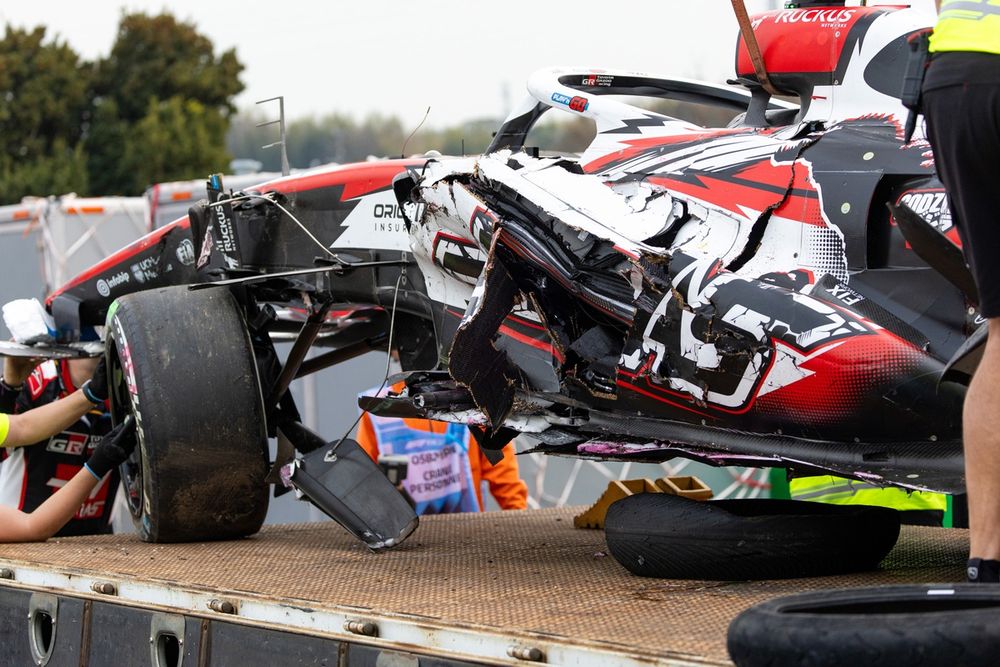
Oliver Bearman's Haas F1 car after his Suzuka crash
Photo by: Kym Illman / Getty Images
The FIA also outlined the timeline for further discussions before final rule tweak proposals are put up for a vote among the teams and stakeholders.
"As part of the round of collaborative discussions, further meetings are planned over the coming fortnight. There is a Sporting Regulations meeting on April 15 during which any changes in Section B that are required to facilitate the technical changes will be discussed. The next technical session will be on April 16 during which points discussed today will be followed up and new topics will be given exposure," the governing body detailed.
"A high-level meeting with representation from all stakeholders is scheduled for April 20 where it is anticipated that preferred options jointly proposed by the technical teams will be considered and a consensus sought on the way forward.
"The 2026 regulations were developed and agreed in close partnership with teams, OEMs, Power Unit Manufacturers, the commercial rights holder and the FIA all at the table. It is in this spirit of collaboration that potential changes are being discussed."
The final meeting on 20 April will largely look like a regular F1 Commission meeting with team representatives, the FIA and F1 management, but with additional representatives from the 2026 power unit manufacturers.
The results of the subsequent e-vote are expected a few days after, after which the agreed changes will be ratified by the FIA World Motor Sport Council.
Share Or Save This Story


Red Bull confirms Lambiase exit for F1 2028

Hill's standout memories from his 1996 F1 title-clinching race, 30 years on

George Russell, Formula 1 and an exercise in patience
FIA reports outlines decision timeline on F1 2026 tweaks

The biggest surprises and disappointments of F1's 2026 field so far

Will Hyundai's updates be enough for Rally Croatia?

Autosport magazine: Ferrari’s challenge and the pros and cons of F1 2026
Subscribe and access Autosport.com with your ad-blocker.
From Formula 1 to MotoGP we report straight from the paddock because we love our sport, just like you. In order to keep delivering our expert journalism, our website uses advertising. Still, we want to give you the opportunity to enjoy an ad-free and tracker-free website and to continue using your adblocker.


Top Comments