


Great Debate: Which old F1 circuit would you like to see return?
Many tracks have come and gone since the F1 world championship began in 1950. Our writers pick out the ones they miss the most
Autosport Retro
Telling the forgotten stories and unearthing the hidden gems from years gone by.
Hockenheim - Oleg Karpov
We all sometimes wish for things to happen – even knowing they never will, right? But if Stefano Domenicali somehow managed to hold on to my phone number and call to ask, “Hey, man, we’ve got one free spot on the calendar – which track do you think we need to bring back?”, I’d be like, “The old Hockenheim”.
But even if he had that eureka moment, realising how brilliant the idea is, he still wouldn’t be able to fight the Baden-Wurttemberg government to cut down the trees again. He’d eventually give up, stuck in German bureaucracy.
Yet he’d probably agree on at least one point: F1 needs tracks with character. And what a character the old Hockenheim was! The twisty stadium section and those four long straights through the forest, separated by chicanes. Incredible speeds, wheel-to-wheel drag-racing fests.
Sure, next year’s half-electric F1 cars would probably drain their batteries so much that by the end of the lap they’d be crawling through the stadium section at pitlane speed limiter pace. But these are details, right? Engineers would figure something out.
But then… if he calls back, exhausted and ready to give up on the idea, I’d still go for Hockenheim – even in its half-castrated (is that even a thing?) form. Because it still produced some mighty racing in this century.
Lewis Hamilton’s amazing win in 2018, which defined the championship battle after Sebastian Vettel slid his Ferrari into the gravel trap, was a mega spectacle. And 2019 was no less exciting…
And let’s be honest, an F1 calendar without a German Grand Prix is still a strange thing. But of course, at some point Domenicali will ask, “Will the Germans pay?” And that’s where it’s definitely going to end.
Watkins Glen -Stuart Codling

Hill leads Lotus team-mate Clark at ‘the Spa-Francorchamps of North America’ in 1967
Photo by: Motorsport Images
So many great old tracks, so little chance of reviving them. Reims? Disfigured with a roundabout at the end of the start/finish straight, and the N31’s become a dual carriageway. Sacre bleu!
The changes in the name of safety my proposal would require might be considered sacrilegious, but let’s go for it: if Formula 1 really wants to hold three races in the USA, bin off the abominable Las Vegas fixture and get back to Watkins Glen.
Rather than host a chilly night race around a sterile street track, let’s have a proper circuit where the atmosphere will be more like Zandvoort.
Watkins Glen is the Spa-Francorchamps of North America, a twisting, flowing circuit with challenging sightlines, plus elevation and camber changes. Yes, those signature pale blue guardrails would have to move out a little and some of the gravel traps might have to expand, but F1 has managed it with the likes of the Red Bull Ring and the aforementioned Zandvoort.
There is an argument to say the chicane would have to change – rather like the Bus Stop at Spa – but you’d want to preserve every other aspect of what is one of the greatest race tracks on earth.
Off-track atmosphere would be fabulous too; Watkins Glen has hosted plenty of rock concerts, which integrates perfectly with the model of turning grands prix into weekend-long ‘events’. Do it. Do it now.
Sepang -Filip Cleeren

Schumacher delivers a superlative drive at Sepang as he demotes Coulthard from the lead in 2001
Photo by: Rainer Schlegelmilch / Getty Images
Over the years, circuit designer Hermann Tilke received plenty of stick for some of his contributions to the F1 calendar, but the German’s original ‘Tilkedrome’ still stands out as his finest to me.
When the Sepang International Circuit was inaugurated ahead of the 1999 Malaysian Grand Prix, it heralded a new generation of modern motor racing venues with its impressive facilities and distinctive umbrella-shaped grandstands.
But more importantly, it’s just a fine racing circuit, with plenty of straights to overtake on and exciting, high-speed corner combinations such as the snaking Turns 5 and 6 and the following double right-hander. Not to forget the tricky, arcing braking zone of Turn 13, which always seemed to catch me out on Geoff Crammond’s Grand Prix 4 game…
The circuit served up some good races, too. It’s the site of Kimi Raikkonen’s dramatic 2003 maiden win, and Michael Schumacher delivered one of his finest hours here too, spinning down to 11th in the wet in 2001 before storming through to win.
We often hear fans and drivers campaign for road courses as F1 introduces more street and parkland venues. With F1 seeking to expand its footprint in Asia, a perfectly fine venue that ticks all the boxes is right there.
Malaysian officials have already indicated that they’ve been priced out of the market for F1 to return, with the country focusing on MotoGP instead. As much as I like Singapore, I wouldn’t be against alternating the two.
Kyalami -Jake Boxall-Legge
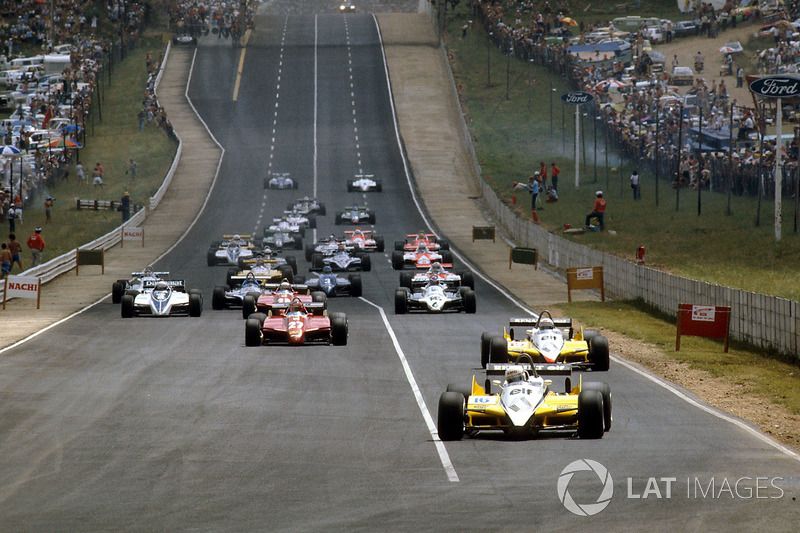
Kyalami’s return to the schedule would address the omission of a Formula 1 race in Africa
Photo by: Motorsport Images
It was hard to pick a circuit that I felt F1 really missed; we kept most of the good ones, and the most glaring omissions were selected by my dear colleagues.
F1 is missing a key element in its desire to be a true ‘world championship’, aside from the obvious difficulties in building and operating a yearly grand prix in Antarctica. At least Mercedes, with its proclivity for colder climes, might be trusted to do quite well there!
A more obvious omission is a race in Africa. There’s been plenty of discussion on that very subject, although the clamour has somewhat died down after both Rwanda and South Africa declared their interest in hosting races.
Cape Town has been trying to secure a place on the F1 calendar with a modified version of its one-time Formula E venue around Green Point, but the obvious answer to the problem lays in the reinstatement of Kyalami.
Its remodel over the latter part of 1988 trimmed off the top half of the old circuit, then sold to housing developers, and the circuit has been through myriad changes ever since.
Its current layout, introduced in 2015, would be a great option for modern F1. It’s challenging, particularly through the Turns 8-9 esses and into the blind-apex Leeukop, but equally holds exploitable areas to attack and attempt brave moves into some of the faster corners.
It’s a tough circuit to nail, and one that will really test the drivers.
This article is one of many in the monthly Autosport magazine. For more premium content, take a look at the October 2025 issue and subscribe today.

Dump Las Vegas and replace it with Watkins Glen, argues Codling
Photo by: Sutton Images

The national racing highlights that we’re looking forward to in 2026

What we're most looking forward to in 2026

The rookies to watch out for in 2026

Who was the best rookie of F1 2025? Our writers have their say

What was the biggest surprise of the 2025 F1 season? Our writers have their say

What was the best F1 race of the 2025 season? Our writers have their say

Who will win the 2025 F1 world title in the Abu Dhabi decider? Our writers have their say

What is F1’s greatest title showdown?

What happened to Evans and Solberg at WRC Rally Croatia

WRC Croatia: Pajari holds off Neuville to lead after Friday drama

The key figures Red Bull has lost over the past three years

Trackhouse team owner on why MotoGP must take risks to grow in the US
Subscribe and access Autosport.com with your ad-blocker.
From Formula 1 to MotoGP we report straight from the paddock because we love our sport, just like you. In order to keep delivering our expert journalism, our website uses advertising. Still, we want to give you the opportunity to enjoy an ad-free and tracker-free website and to continue using your adblocker.


Top Comments